
written by: Sabrina Purtee
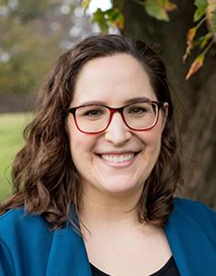
Moths are a little weird, and that’s why Dr. Leah Rosin studies them. Dr. Rosin maintains a lab at the National Institute of Health (NIH) investigating the mechanisms involved in sex cell development, aka meiosis, through Pantry Moths in the genus Plodia. Dr. Rosin undertakes studies mapping specific parts of DNA involved in pantry moth meiosis and her work stands out in the meiosis community. Most researchers limit their studies of meiosis to more classical model organisms like the fruit fly, Drosophila, the nematode called C. elegans, or mice. While Dr. Rosin does use multiple other model species in her lab, her focus on moths is due to their large number of chromosomes (to compare, fruit flies only have 4 chromosomes). This key difference may make them a better model for human diseases and infertility that can result from errors in meiosis. Although the mechanisms of meiosis are generally conserved across all sexually reproducing species, indeed humans also undergo meiosis, Dr. Rosin’s work is showing that things are not necessarily that straightforward. The ultimate goal of her research is to uncover the mechanics behind successful and unsuccessful meiosis, to improve fertility treatments in humans and decrease rates of genetic diseases such as Down Syndrome and Turner Syndrome.
Dr. Rosin’s interest in genetics first peaked in high school, but it took her a little time to discover exactly what it was about genetics that interested her. Throughout her graduate and post-graduate training, she studied chromosome folding, mitotic cell division, and studied under different advisors. Once she started her second post-doctoral position at NIH, she knew she wanted to shift her focus after discovering the striking visual complexities of silkworm moth chromosomes during meiosis. The researcher she worked for at the time fostered her curiosity and encouraged her to develop her own projects around this novel discovery.
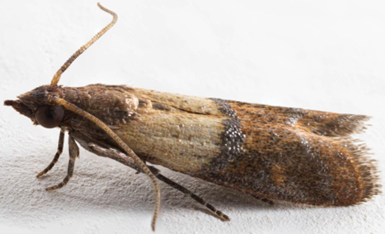
(Photo credit: Mvuijlst, CC BY-SA 4.0 https://creativecommons.org/licenses/by-sa/4.0, via Wikimedia Commons)
Advice for Students and Beyond
Finding a model that isn’t commonly studied has been key for Dr. Rosin, and she encourages other scientists to follow suit, especially if they’re looking to change fields. Non-model systems are ripe for the picking when it comes to new discoveries in science, and working with these systems means that published results are always new and novel. However, finding a funding source that rewards high-risk, high-reward research can be challenging, especially at the post-doctoral level. Dr. Rosin recommends graduate students reach out to head researchers with their ideas for projects to see if they are interested and able to help fund them. She also advises that learning new tools and skills during post-doctoral training is as important as developing independent research projects. Don’t be afraid of doing multiple post-doc positions to maximize your learning potential. She emphasizes that during the course of training, the key is learning how to be a good scientist while trying to maintain a healthy work-life balance. If you learn as much as you can, even if it’s frustrating or time-consuming, it makes you a better scientist later in your career.
Looking to the Future
In addition to the pantry moth, Dr. Rosin works with mice, fruit flies, and silkworms, detangling the complex inner workings of meiosis and how they differ between these organisms. One current project she is excited about working on involves Turner Syndrome, a genetic disease that results in infertility in people born with a single X chromosome (designated XO). However, roughly 5% of these people are not infertile and can have healthy children without reproductive assistance. Dr. Rosin’s work involves investigating Turner Syndrome-associated infertility, what causes it, and why some affected individuals “escape” this infertility. Through her work, Dr. Rosin is not only shining a spotlight on an insect not normally thought to be useful in science, but also showing how insect research can be applicable to life’s many systems throughout this world.
About the writer: Sabrina Purtee is a first year Master’s student under Dr. Niranjana Krishnan in the Insect Pesticide Toxicology Lab studying the low-dose effect of pesticides on the physical and molecular process of ecdysis. See more about the lab and their research here.
Citations:
“Get to Know: Leah Rosin, Ph.D.” Nih.gov, 23 Apr. 2024, www.nichd.nih.gov/about/profiles/KnowNICHD/rosin.
“Leah Francesca Rosin, Ph.D.” Nih.gov, Intramural Research Program, 20 Apr. 2026, irp.nih.gov/pi/leah-rosin.
“Research - Leah Rosin Lab.” Nih.gov, US Department of Health and Human Services, 7 Nov. 2023, www.nichd.nih.gov/research/atNICHD/Investigators/rosin/research.
Mvuijlst, CC BY-SA 4.0, via Wikimedia Commons, https://creativecommons.org/licenses/by-sa/4.0.