
Biodiversity, Evolution & Systematics
The biodiversity of insects and other arthropods is vast, but in many ways, still poorly documented and understood. Department of Entomology faculty members investigate the evolution of biodiversity from a variety of perspectives and at different levels of biological organization. They work in the field, lab, and museum, and investigate a wide range of species.
Phylogenetics, Systematics, and Biogeography
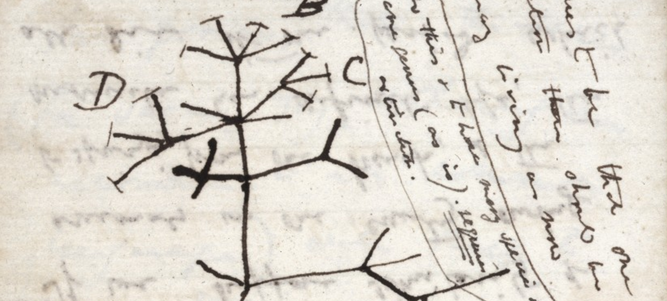 We use phylogenetics to reconstruct evolutionary histories of species, the "tree of life." These data are fundamental to evolutionary biology, holding the keys to when and where diversification occurred. This is interrelated to the science of biogeography, how diversity varies across geographies from landscapes to the entire planet.
This evolutionary framework forms the basis of systematics, the science of organizing diversity into meaningful and useful classification frameworks. Our department has a long and storied history training systematists in collaboration with the Smithsonian Museum of Natural History and the USDA Systematic Entomology Laboratory, and other nearby institutions.
Evolution of Morphology
While molecular data now forms the primary basis for reconstructing the tree of life, morphology is critical to how an organism works and interacts with the world. Entomology faculty seek to understand how morphology varies, and the functional significance of that variation. That involves understanding the biomechanical and biophysical principles at play.
Evolution and Development
The field of Evo-Devo seeks to understand how the evolutionary modification of developmental processes gives rise to new diversity. Faculty members and students in our department use a variety of model species and groups to investigate the nuts and bolts of how morphology and other key traits evolve and have led to the spectacular diversity of insects.
Related News
Connected Researchers