
Ecology, Conservation, Restoration & Climate Change
Expertise in ecology is broadly represented in the Department of Entomology and includes behavioral ecology, chemical and microbial ecology, plant-insect and predator-prey interactions, population and food-web dynamics, and community ecology.
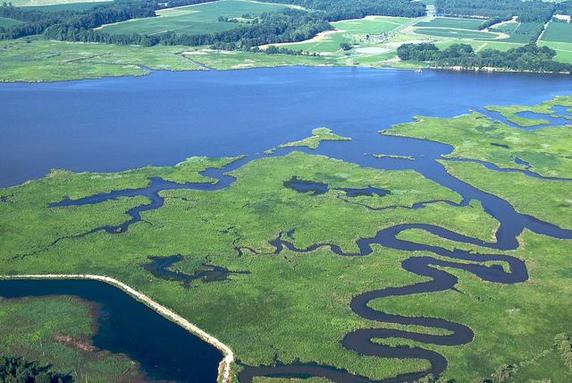
Department of Entomology faculty members also maintain a commitment to the application of ecological theory to biological control, pest management, habitat restoration, and conservation biology. Maryland has a long and rich tradition of biological control involving collaborative projects with federal, state, and county agencies, and with private industry. Active research programs supported by the NSF and USDA are ongoing in both natural and managed systems.
Current research efforts emphasize the conservation of natural enemies, augmentative releases, and investigations into the basic ecology and behavior of natural enemies. Concerning pest management at large, research projects include the use of transgenic crops, the isolation of bioactive substances from microbial symbionts of insects, and the identification and incorporation of genes from entomopathogenic fungi into plants. Recently, several faculty members have extended their ecological expertise to address other applied problems associated with the consequences of transgenic crops on non-target organisms, habitat fragmentation, biodiversity, and the disturbance food-web dynamics.
Insects function as vital components of freshwater and estuarine ecosystems, serving critical roles in processing organic matter, herbivory, predation, and as food for higher trophic levels. As a consequence, species of aquatic and semi-aquatic insects are valuable to researchers as model systems to study insect ecology and the functioning of aquatic ecosystems. Because aquatic insects respond differently to physical and chemical conditions of freshwater habitats, they are commonly used as biological indicators of environmental stresses and effects of restoration. Many species are also important pests, such as mosquitoes and black flies, and others are the focus of conservation efforts.
The University of Maryland’s location near the Chesapeake Bay creates many opportunities for research that contributes to our understanding of what controls the health of watersheds and their tributaries. Maryland’s waterways are crucial to the economic and ecological vitality of the region, yet their health is currently threatened to a staggering degree. This region comprises less than one-fifth of the contiguous United States but accounts for over one-half of the nation's population and housing supply. Restoration of these ecosystems is therefore being emphasized and receiving enormous financial support. Many faculty at the University of Maryland have large research programs with the aim to understand the interplay of complex social and environmental factors that influence the Bay’s health.
Related News

Connected Researchers