
Written by: Harriett Harris and Daniel Davis
The Entomology department was able to gain better insight into the world of wildlife toxicology last week, as Dr. Barnett Rattner from the United States Geological Survey (USGS) took the stage to discuss the history of wildlife toxicology both nationally and abroad.
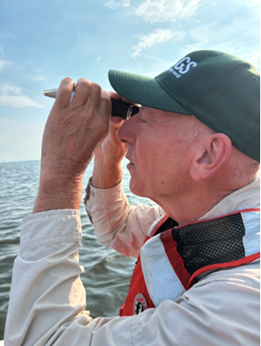
Dr. Rattner, a University of Maryland alumnus, has worked for the Department of the Interior since 1978, specializing in hypothesis-driven experiments in both laboratory and field settings. Dr. Rattner has spent his career focusing on hazard and risk assessments and evaluating the toxicity of both legacy and contemporary pollutants, such as, industrial industrial contaminants, petroleum crude oil, pesticides, heavy metals and more, and their effects on wildlife and the environment. Focusing largely on birds, Dr. Rattner has worked on the front lines of studies that have far-reaching impacts on the health of a myriad of organisms, especially our local raptors and migratory avian species.
The field of wildlife toxicology is a recent one, only existing for the last 150 years or so. Our curiosity about wildlife and toxicants has existed for thousands of years. On record since around 1500 BC, there are papyrus records describing toxins, the first known records of their kind. Following suit in 250 BC was the first ordained protection of wildlife in India. The common thread that has driven progress in this field has been ecological disasters. In the 20th century, people began noticing beloved species of animals dying that coincided with the use of aerial applications of pesticides. It was here that the intersections of wildlife and intoxicants in the environment began to intersect. The Department of the Interior Fish and Wildlife Service did a lot of the formative DDT trials to evaluate wildlife toxicity in the 1940s that led to the understanding of how pesticides can impact avian reproduction and fitness. From there, the field became more popular, with voices like Rachel Carson pushing the drive for the public to care about how we impact the environment and species around us. Though that is not to say she was not met with skepticism and criticism as a result.
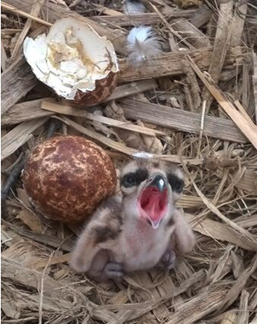
Today, our challenges may feel brand new to many of us, but funding cuts, continuing industrial waste and product spills, consumer waste, and pollutants are all factors that have haunted scientists for decades. Despite these ever-growing challenges, perhaps the lesson here is to push forward like the previous generations of wildlife ecotoxicologists. Critics did not stop their forward progress; data-driven policies prevailed in this specific case. Researchers, like Dr.Rattner, have persisted and continue to work tenaciously to address these problems. While we hear about environmental disasters so frequently, Dr. Rattner pointed out that we are often less likely to discuss the ways in which things have gotten better. Bringing up the Chesapeake Bay as an example, he was quick to highlight that yes, there are ongoing pollutants causing harm, but it is also true that the Bay’s health has improved dramatically over the five decades. The fruits of solutions to large-scale problems in wildlife ecotoxicology are often best observed longitudinally, which could perhaps be a lesson in patience for us all. The work we do to improve the world around us as scientists may not reap benefits overnight but can pay off tenfold in the decades to come. There are many lessons to be found in Dr. Rattner’s overview of the field of wildlife ecotoxicology, but perhaps the most important one was that these challenges too shall pass, and while it may be hard not to be bogged down by the burden of it all, the most important thing you can do is to just keep working to find solutions anyway.
Image sources:
D’Angelo, Pamela. “Scientists See Trouble in the Number of Osprey Chicks in the Chesapeake Bay.” WVTF, 4 Sept. 2025, www.wvtf.org/news/2025-09-04/scientists-see-trouble-in-the-number-of-osprey-chicks-in-the-chesapeake-bay. Accessed 25 Feb. 2026.
“Long-Term Studies Examine Contaminant Exposure and Reproduction of Ospreys Nesting in Two Large United States Estuaries.” USGS, 30 May 2018, www.usgs.gov/programs/environmental-health-program/science/long-term-studies-examine-contaminant-exposure-and. Accessed 25 Feb. 2026.
![[Seminar Blog] Mass Digitization of the Insect Collection at the National Museum of Natural History](/sites/default/files/styles/16_9_350x200/public/articles/entomology_spring26seminarblog_dikow_2_0.png.webp?itok=wMtmTfWT)